
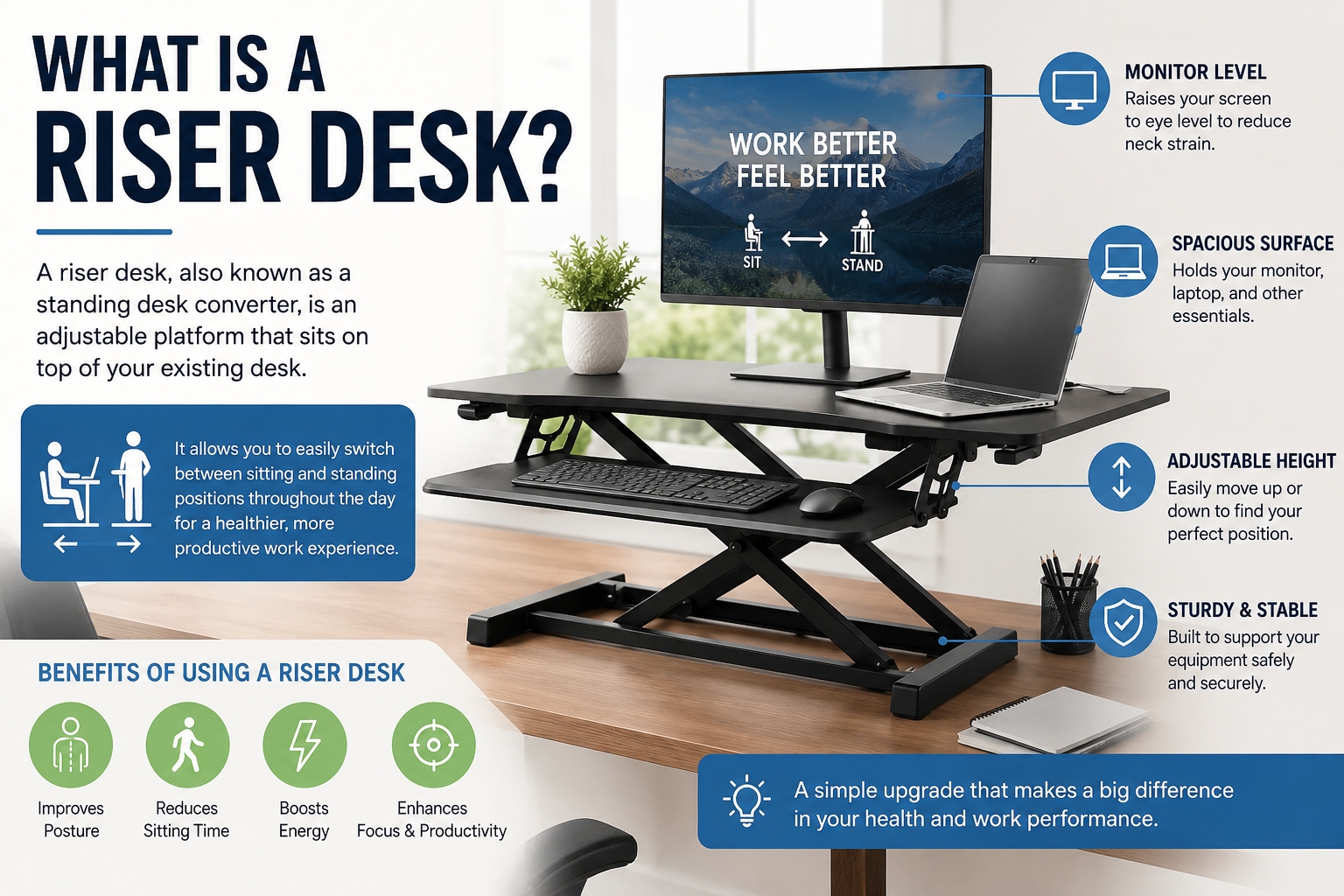
A riser desk, also known as a desk riser or standing desk converter, is an ergonomic workstation accessory designed to elevate a computer, monitor, keyboard, and other work essentials to a comfortable standing height. Unlike a full standing desk, a riser desk sits on top of an existing desk, allowing users to switch between sitting and standing throughout the workday.
As modern workplaces become increasingly focused on employee wellness and productivity, riser desks have gained popularity among remote workers, office professionals, students, gamers, and business owners. These adjustable platforms provide a flexible and affordable solution for reducing prolonged sitting while promoting healthier posture and movement.
Whether you’re working from home or in a corporate office, understanding what a riser desk is and how it can improve your workspace is essential for creating a more comfortable and productive environment.
Table of Contents
- What Is a Riser Desk?
- How Does a Riser Desk Work?
- Types of Riser Desks
- Benefits of Using a Riser Desk
- Riser Desk vs Standing Desk
- Ergonomic Advantages
- Health Benefits
- Productivity Improvements
- How to Choose the Best Riser Desk
- Common Mistakes to Avoid
- Best Uses for a Riser Desk
- Frequently Asked Questions
- Conclusion
How Does a Riser Desk Work?
A riser desk is placed directly on top of a traditional desk or table. The platform can be adjusted vertically using various mechanisms such as:
- Gas spring systems
- Manual lift mechanisms
- Pneumatic lifts
- Electric motors
- Scissor-lift frames
Users can quickly raise the desk riser when they want to stand and lower it when they prefer sitting. Many models include separate platforms for monitors and keyboards, ensuring proper ergonomic positioning.
The primary purpose is to create a flexible workstation that encourages movement and reduces the negative effects associated with prolonged sitting.
Types of Riser Desks
1. Fixed Desk Risers
Fixed risers elevate monitors and equipment but do not offer adjustable height settings.
Features
- Simple design
- Affordable pricing
- Lightweight construction
- Ideal for monitor elevation
Best For
- Small offices
- Students
- Basic ergonomic improvements
2. Adjustable Desk Risers
These models allow users to change height positions according to their needs.
Features
- Adjustable height levels
- Better ergonomic flexibility
- Suitable for sitting and standing
Best For
- Remote workers
- Office professionals
- Hybrid work environments
3. Standing Desk Converters
Standing desk converters are among the most popular types of riser desks.
Features
- Large work surface
- Keyboard tray
- Monitor platform
- Smooth height adjustments
Best For
- Full-time office work
- Multiple monitor setups
- Professional workstations
4. Electric Riser Desks
Electric risers use motors for effortless height adjustment.
Features
- Push-button controls
- Memory presets
- Smooth operation
- Premium ergonomic experience
Best For
- Executive offices
- Intensive daily use
- Productivity-focused users
Benefits of Using a Riser Desk
Improved Posture
One of the most significant benefits of a riser desk is improved posture. Many office workers suffer from neck, shoulder, and back discomfort caused by poorly positioned screens.
A properly adjusted riser desk helps:
- Keep screens at eye level
- Reduce neck strain
- Promote spinal alignment
- Improve sitting posture
Reduced Sitting Time
Research consistently shows that excessive sitting may contribute to various health concerns.
A riser desk encourages users to:
- Stand regularly
- Change positions frequently
- Move throughout the day
- Avoid prolonged inactivity
This movement can support better overall workplace wellness.
Increased Productivity
Many professionals report feeling more alert while standing.
Potential productivity benefits include:
- Better focus
- Improved concentration
- Higher energy levels
- Reduced afternoon fatigue
Standing periodically can help maintain engagement during long work sessions.
Enhanced Workspace Flexibility
Riser desks allow users to convert nearly any traditional desk into a standing workstation.
Benefits include:
- No major furniture replacement
- Quick setup
- Portability
- Cost-effective upgrades
Cost Savings
Purchasing a full standing desk can be expensive.
A riser desk offers:
- Lower upfront costs
- Easy installation
- Reduced office renovation expenses
- Budget-friendly ergonomic improvements
Riser Desk vs Standing Desk
Many people confuse riser desks with standing desks.
| Feature | Riser Desk | Standing Desk |
|---|---|---|
| Sits on Existing Desk | Yes | No |
| Cost | Lower | Higher |
| Installation | Easy | Moderate |
| Portability | High | Low |
| Workspace Size | Limited | Larger |
| Flexibility | Excellent | Excellent |
Choose a Riser Desk If:
- You already have a desk.
- You want a budget-friendly solution.
- You need portability.
- You work in rented office spaces.
Choose a Standing Desk If:
- You want a permanent workstation.
- You need a larger workspace.
- You prefer a built-in design.
Ergonomic Advantages of a Riser Desk
Proper Monitor Height
The top of your monitor should align with eye level.
A riser desk helps prevent:
- Forward head posture
- Neck strain
- Eye fatigue
- Upper back discomfort
Better Keyboard Placement
Proper keyboard positioning reduces wrist strain and promotes neutral arm alignment.
A quality riser desk allows:
- Elbows at 90 degrees
- Relaxed shoulders
- Straight wrists
- Comfortable typing posture
Encourages Movement
Movement is a key component of ergonomic health.
A riser desk promotes:
- Position changes
- Stretching
- Walking breaks
- Active work habits
Health Benefits of a Riser Desk
Reduced Back Pain
Many office workers experience lower back discomfort due to prolonged sitting.
Standing periodically may help:
- Reduce pressure on the spine
- Improve posture
- Encourage core muscle engagement
Improved Circulation
Alternating between sitting and standing can improve blood flow throughout the body.
Benefits may include:
- Reduced leg discomfort
- Better circulation
- Lower feelings of stiffness
Increased Energy Levels
Standing workstations may help users feel more energized throughout the day.
Many workers report:
- Less fatigue
- Greater alertness
- Better work engagement
Better Workplace Wellness
Riser desks contribute to healthier office habits by encouraging movement and reducing sedentary behavior.
Productivity Improvements Associated with Riser Desks
Enhanced Focus
Standing can increase engagement during tasks requiring concentration.
Common benefits include:
- Reduced drowsiness
- Improved attention
- Faster task completion
Greater Collaboration
In office environments, standing encourages easier communication among team members.
Employees often:
- Interact more naturally
- Participate actively in meetings
- Stay engaged during discussions
Improved Mood
Many users experience increased workplace satisfaction after incorporating standing periods into their daily routines.
This may lead to:
- Better morale
- Greater motivation
- Improved workplace experiences
How to Choose the Best Riser Desk
Consider Workspace Size
Measure your current desk before purchasing.
Important factors include:
- Width
- Depth
- Available clearance
- Monitor setup
Check Weight Capacity
Ensure the riser can support:
- Monitors
- Laptops
- Keyboards
- Accessories
Heavy-duty models are recommended for multi-monitor setups.
Evaluate Height Range
Choose a riser that accommodates your height comfortably.
Look for:
- Wide adjustment ranges
- Smooth transitions
- Stable positioning
Look for Stability
A stable riser desk reduces wobbling and improves user confidence.
Quality indicators include:
- Strong frames
- Durable materials
- Reliable lifting mechanisms
Consider Ergonomic Features
Advanced models may include:
- Keyboard trays
- Cable management
- Monitor arms
- Device holders
These features can further improve workspace organization.
Common Mistakes to Avoid
Standing All Day
Standing continuously is not recommended.
Experts generally suggest alternating between sitting and standing throughout the day.
Incorrect Monitor Position
Monitors placed too low can create neck strain.
Always adjust screens to eye level whenever possible.
Poor Footwear
Comfortable footwear can make standing work sessions more enjoyable and sustainable.
Ignoring Movement
Even with a riser desk, regular movement remains important.
Take short breaks to:
- Walk
- Stretch
- Change positions
Best Uses for a Riser Desk
A riser desk is suitable for:
Remote Work
Home office professionals benefit from flexible work positioning.
Corporate Offices
Businesses use riser desks to support employee wellness initiatives.
Education
Students can improve posture while studying or attending virtual classes.
Gaming Setups
Gamers often use desk risers to achieve optimal monitor positioning.
Creative Professionals
Designers, writers, developers, and content creators can benefit from adjustable workstations.
Frequently Asked Questions (FAQ)
What is a riser desk used for?
A riser desk is used to elevate a workstation, allowing users to alternate between sitting and standing while working.
Is a riser desk better than a standing desk?
A riser desk is more affordable and portable, while a full standing desk offers a larger workspace and integrated design.
Can a riser desk help with back pain?
A properly adjusted riser desk may help improve posture and reduce discomfort associated with prolonged sitting.
Are riser desks worth it?
For many users, riser desks provide a cost-effective way to create a healthier and more ergonomic workspace.
How long should I stand at a riser desk?
Many ergonomic experts recommend alternating between sitting and standing rather than remaining in one position all day.
Conclusion
A riser desk is an innovative ergonomic solution that transforms a traditional workstation into a flexible sit-stand workspace. By elevating monitors, keyboards, and work equipment to standing height, riser desks help improve posture, encourage movement, reduce prolonged sitting, and support productivity.
Whether you’re a remote worker, office professional, student, gamer, or entrepreneur, a quality desk riser can significantly enhance your workspace without the expense of replacing your existing desk. With multiple styles available—including adjustable risers, standing desk converters, and electric models—there is a solution for nearly every workspace and budget.
As workplace wellness continues to evolve, riser desks remain one of the most practical and accessible tools for creating a healthier, more comfortable, and more productive work environment.