
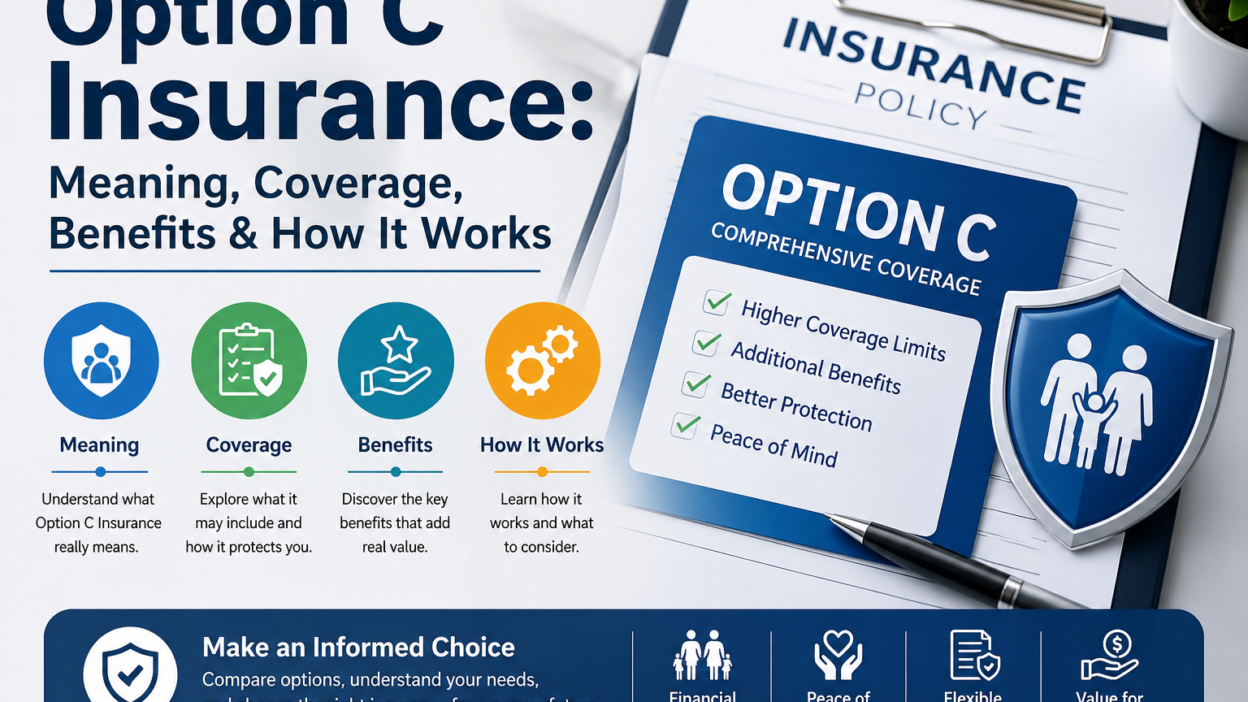
In your search for insurance plans, you might be able to find Option C. Option C. At first impression, it appears to be an insurance product you would expect to find however it’s actually more complex. Different insurance companies, employers and benefit providers typically utilize the term Option C to describe a particular coverage plan within their own plans. The benefits cost, eligibility, and conditions can differ depending on the company offering the plan.
Knowing the meaning of Option C means in your specific policy is vital prior to making any financial decision. Instead of believing that all Option C plan provides the same level of protection it’s essential to study the insurance policy’s documents and look at the different coverage options.
Learn what Option C insurance means, how it works, what it may cover, and how to compare plans before choosing the right insurance option for your needs.
Understanding Option C in Insurance
In the insurance business, plan names typically are organized into straightforward labels, such as Option A or Option B or Option C. These labels allow customers to assess various levels of protection within the same insurance policy.
In a lot of instances, Option C represents a middle-level or enhanced coverage option. It can offer greater coverage than a standard plan but still be cheaper than a premium plan. The exact details depend on the insurance company.
Since insurers create themselves, there’s no uniform description of Option C. One firm’s Option C may be focused on a higher limit of benefit and another may focus on the additional services or coverage options.
Why Insurance Companies Use Different Plan Options
Insurance companies cater to customers with different financial needs families, needs, and risks. Instead of providing just one insurance plan, they usually provide multiple options for plans to allow customers more choice.
This arrangement allows people to pick a coverage that best suits their budget and protection requirements. A person looking for a low-cost insurance might opt for a more basic plan, whereas a different customer may want additional advantages that justify a higher cost.
Option C is typically marketed as a way to balance affordable pricing and a comprehensive level of protection and comprehensive protection, which makes it an appealing choice for a large number of policyholders.
What May Be Included in an Option C Plan
While coverage is different for each provider and plan, a majority of Option C insurance plans include greater protection than basic options. According to the insurer the policyholders could receive greater coverage limits, more benefits, or a wider range of coverage for specific types of claims.
Some policies may also have additional riders or features that can enhance the value of the plan. These additional benefits could make huge difference when unplanned circumstances occur.
Before buying the insurance you want, be sure to read the policy’s description and exclusions, waiting times, waiting periods as well as deductibles and claim conditions. Knowing these terms can help avoid unexpected surprises in the future.
Is Option C Right for You?
Selecting the best insurance plan is based on your specific circumstances, rather than a plan’s name.
For instance a young person with little financial responsibility may be more concerned with the affordability of their lifestyle, whereas a growing family may require more insurance to limit the financial risk. Homeowners, business owners and retirees typically have distinct requirements for insurance.
The best decision for insurance is one that takes into consideration your present situation, your future goals, and financial obligations, instead of choosing a policy only on its name.
Comparing Insurance Options
When multiple insurance options are available, comparing them is vital. Beyond the monthly cost gives a better understanding of the overall value of the policy.
Check the coverage total including the policy exclusions, deductible conditions and waiting periods, claims procedures, renewal conditions and the reputation of customer service. These elements can have more impact over your experiences than the label of the plan.
A slight increase in premium could give you a better financial protection should an unexpected event occur.
Questions to Ask Before Choosing Option C
Before you enroll in an insurance policy that is labeled Option C Make sure you ask your insurance provider a series of crucial questions. Find out precisely what coverage the policy provides and what types of situations are not covered and how claims are handled as well as whether premiums may be adjusted with time, and whether there are any benefits that can be added.
Understanding these aspects helps you be able to make a sound decision upon facts instead of assumptions.
Insurance advisors can provide information on the different plans available and can recommend coverage that is compatible with your specific needs.
Reading the Policy Carefully
One of the most common mistakes consumers make is to trust marketing materials rather than reading the policy.
The policy document includes the official rules and conditions that govern the way in which coverage is conducted. Reading this document can help you comprehend your rights, obligations, and the specific circumstances in the circumstances that benefits are paid.
If a section is unclear, you can ask the insurance company for clarification prior to signing the agreement.
Final Thoughts
Option C is a term used to describe a specific type of insurance. Option C isn’t a reference to an insurance product that is universal. Instead, it typically represents the specific coverage level that is that is created by a private insurance company or an employer-sponsored benefits program. Since each provider defines their plans in different ways, knowing the details of your individual policy is more crucial than simply focusing on the policy’s name by itself.
Before you decide on an insurance policy look over benefits, compare them, read the policy’s documents thoroughly and ask questions about insurance coverage, exclusions and the deductibles and procedures for claims. By following these steps, you can make sure that the insurance you choose offers the financial protection you require while staying in your financial budget.
When you think about your insurance choices carefully and basing your decisions on verified policies, you’ll be able to make a decision with more confidence and avoid confusion about the details of an “Option C” plan actually contains.