
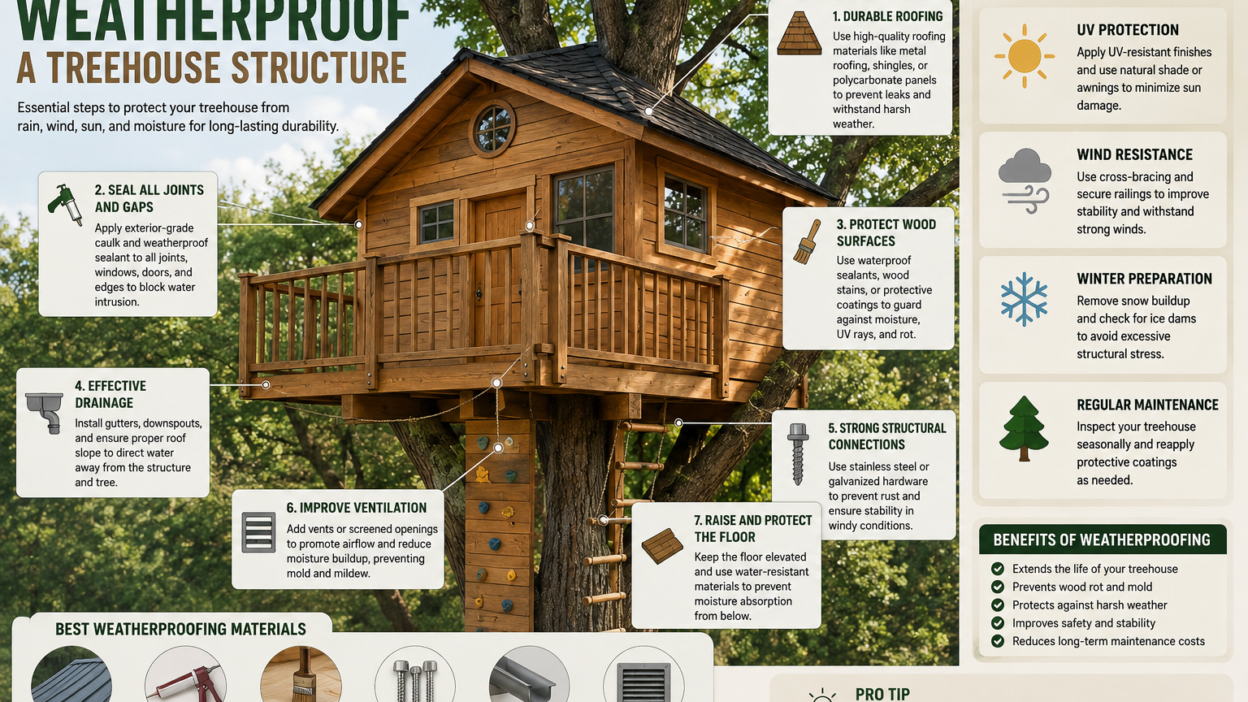
Learn how to weatherproof a treehouse structure with proven techniques for protecting against rain, wind, sun, snow, and moisture. Discover the best materials, maintenance tips, and expert strategies for extending the lifespan of your treehouse.
How to Weatherproof a Treehouse Structure
A treehouse is more than just a backyard retreat. It can serve as a play area, reading nook, guest space, home office, or outdoor escape. However, because treehouses remain exposed to the elements year-round, proper weatherproofing is essential. Rain, sunlight, humidity, wind, and seasonal temperature changes can gradually weaken the structure if adequate protection measures are not implemented.
Weatherproofing a treehouse helps prevent water damage, wood rot, mold growth, corrosion, and structural deterioration. Whether you are building a new treehouse or upgrading an existing one, investing time in weatherproofing will increase durability, improve safety, and reduce long-term maintenance costs.
This guide explains everything you need to know about weatherproofing a treehouse structure effectively.
Why Weatherproofing a Treehouse Matters
Treehouses experience unique environmental challenges because they are elevated and surrounded by natural elements. Unlike traditional buildings, treehouses move slightly as trees sway in the wind. This movement creates additional stress on joints, roofing systems, and protective coatings.
Proper weatherproofing offers several benefits:
- Prevents wood rot and decay.
- Protects against moisture penetration.
- Extends the lifespan of construction materials.
- Improves structural stability.
- Reduces maintenance expenses.
- Increases safety for occupants.
- Enhances comfort during different seasons.
Without weatherproofing, even a well-built treehouse can develop serious problems within a few years.
Choose Weather-Resistant Building Materials
The first step in weatherproofing begins before construction starts. Selecting durable materials creates a strong foundation for long-term protection.
Pressure-Treated Lumber
Pressure-treated lumber contains preservatives that resist moisture, insects, and fungal growth. It is commonly used for support beams, floor framing, and structural components.
Benefits include:
- Improved moisture resistance.
- Reduced risk of insect infestation.
- Longer service life.
- Greater structural durability.
Cedar Wood
Cedar is naturally resistant to rot and insects. Its attractive appearance and durability make it a popular choice for treehouse siding and decking.
Advantages include:
- Natural weather resistance.
- Minimal maintenance requirements.
- Pleasant appearance.
- Resistance to decay.
Stainless Steel Hardware
Standard metal fasteners can rust quickly when exposed to outdoor conditions. Stainless steel or galvanized hardware offers superior protection.
Recommended hardware includes:
- Bolts
- Screws
- Washers
- Brackets
- Hinges
High-quality hardware prevents corrosion-related failures over time.
Install a Durable Roofing System
The roof serves as the treehouse’s primary defense against weather. A poorly designed roof can allow water intrusion that damages walls, flooring, and support structures.
Select Suitable Roofing Materials
Popular roofing options include:
Asphalt Shingles
Asphalt shingles provide reliable protection and are easy to install.
Metal Roofing
Metal roofs offer exceptional longevity and excellent resistance to rain, snow, and UV exposure.
Polycarbonate Panels
Transparent polycarbonate panels allow natural light to enter while providing weather protection.
Cedar Shakes
Cedar shakes create a rustic appearance and offer natural durability when properly maintained.
Add Roof Overhangs
Roof overhangs help direct rainwater away from walls and windows.
Benefits include:
- Reduced water penetration.
- Better wall protection.
- Enhanced drainage.
- Longer siding lifespan.
A roof overhang of at least 12 to 24 inches often provides effective protection.
Seal Every Joint and Gap
Water commonly enters structures through small gaps around joints, windows, and doors.
Apply Exterior Caulk
Use high-quality waterproof caulk around:
- Window frames
- Door frames
- Roof joints
- Trim connections
- Utility penetrations
Inspect caulking annually and replace damaged sections promptly.
Use Weatherproof Flashing
Flashing directs water away from vulnerable areas.
Install flashing around:
- Roof valleys
- Window tops
- Door openings
- Roof-wall intersections
Proper flashing significantly reduces water infiltration risks.
Protect the Wood with Sealants and Stains
Wood remains one of the most vulnerable components of a treehouse.
Waterproof Wood Sealers
A waterproof sealer creates a protective barrier that reduces moisture absorption.
Benefits include:
- Prevention of water damage.
- Reduced cracking.
- Improved durability.
- Enhanced appearance.
Apply sealers according to manufacturer recommendations.
Exterior Wood Stains
Wood stains provide both protection and aesthetic appeal.
Popular stain types include:
- Transparent stains
- Semi-transparent stains
- Solid-color stains
Many modern stains contain UV blockers that protect against sun damage.
Reapply Protective Coatings
Weatherproof coatings gradually wear away over time.
General maintenance schedule:
- Inspect annually.
- Recoat every 2 to 4 years.
- Address peeling or fading immediately.
Regular maintenance preserves the integrity of exposed wood surfaces.
Install Effective Drainage Systems
Water management plays a critical role in treehouse weatherproofing.
Gutters and Downspouts
Gutters collect rainwater from the roof and direct it away from the structure.
Advantages include:
- Reduced erosion.
- Less water pooling.
- Better foundation protection.
- Increased roof lifespan.
Choose corrosion-resistant gutter materials for outdoor environments.
Ensure Proper Roof Slope
A roof should encourage rapid water runoff.
Recommended roof pitch varies depending on climate and roofing material, but adequate slope prevents standing water that can accelerate deterioration.
Weatherproof the Floor System
The floor experiences constant exposure to moisture from rain, humidity, and condensation.
Seal Floorboards
Apply waterproof coatings to all exposed flooring surfaces.
Pay special attention to:
- Floor edges
- Underside surfaces
- High-traffic areas
Create Ventilation Beneath the Floor
Good airflow helps moisture evaporate quickly.
Ventilation benefits include:
- Reduced mold growth.
- Prevention of rot.
- Improved structural health.
- Better air quality.
Proper ventilation is especially important in humid regions.
Protect Against Wind Damage
Strong winds can cause significant stress on elevated structures.
Strengthen Structural Connections
Use heavy-duty connectors to secure:
- Support beams
- Joists
- Railings
- Roofing systems
Robust connections improve overall stability during storms.
Install Cross Bracing
Cross bracing increases resistance to lateral movement.
Benefits include:
- Improved stability.
- Reduced sway.
- Better storm performance.
- Enhanced safety.
Treehouses in windy locations particularly benefit from additional bracing.
Prevent Mold and Mildew Growth
Moisture and poor airflow create ideal conditions for mold development.
Increase Ventilation
Install:
- Vents
- Operable windows
- Screened openings
Good airflow helps keep interior surfaces dry.
Use Mold-Resistant Products
Many exterior paints and sealants contain mold inhibitors.
These products provide an additional layer of protection in damp climates.
Conduct Routine Inspections
Check regularly for:
- Dark stains
- Musty odors
- Soft wood
- Visible fungal growth
Early detection simplifies repairs and prevents extensive damage.
Protect Windows and Doors
Windows and doors represent common entry points for moisture and drafts.
Install Weather Stripping
Weather stripping improves sealing performance around movable components.
Benefits include:
- Reduced air leakage.
- Improved comfort.
- Better moisture protection.
- Enhanced energy efficiency.
Choose Exterior-Grade Windows
Outdoor-rated windows provide greater resistance to:
- Water intrusion
- UV damage
- Temperature fluctuations
Quality windows contribute significantly to overall weatherproofing performance.
Defend Against UV Damage
Sunlight gradually degrades exposed materials.
Apply UV-Resistant Finishes
UV-resistant coatings help prevent:
- Fading
- Cracking
- Warping
- Surface deterioration
These finishes are especially important in sunny climates.
Consider Shade Strategies
Natural shade from surrounding tree canopies may reduce direct sun exposure.
Additional options include:
- Awnings
- Shade sails
- Covered porches
Reducing UV exposure extends the lifespan of exterior surfaces.
Prepare for Winter Conditions
Cold climates present unique weatherproofing challenges.
Remove Snow Accumulation
Heavy snow loads can stress roofing systems.
Regular snow removal helps prevent:
- Structural overload.
- Ice dam formation.
- Roof damage.
Insulate When Necessary
For year-round use, insulation improves comfort and energy efficiency.
Common insulation options include:
- Rigid foam boards
- Spray foam
- Fiberglass batts
Proper insulation also reduces condensation issues.
Seasonal Treehouse Maintenance Checklist
Weatherproofing is not a one-time task. Ongoing maintenance ensures continued protection.
Spring
- Inspect roofing materials.
- Check sealants.
- Examine structural hardware.
- Clean gutters.
Summer
- Reapply protective coatings.
- Inspect for UV damage.
- Verify ventilation performance.
Fall
- Remove leaves and debris.
- Inspect drainage systems.
- Prepare for winter weather.
Winter
- Monitor snow loads.
- Check for leaks.
- Inspect structural movement after storms.
Consistent inspections allow homeowners to identify and address small problems before they become major repairs.
Common Weatherproofing Mistakes to Avoid
Many treehouse owners unknowingly shorten the lifespan of their structures through avoidable mistakes.
Ignoring Tree Growth
Trees continue growing throughout their lives. Construction methods must allow for natural movement and expansion.
Using Interior-Grade Materials
Indoor products often lack the durability required for outdoor exposure.
Skipping Maintenance
Even premium materials require periodic inspections and upkeep.
Poor Drainage Design
Water accumulation remains one of the leading causes of structural deterioration.
Inadequate Ventilation
Poor airflow encourages moisture buildup and mold growth.
Avoiding these mistakes can significantly improve long-term performance.
Frequently Asked Questions
How often should a treehouse be weatherproofed?
Most sealants and protective coatings should be inspected annually and reapplied every two to four years depending on climate conditions and product quality.
What is the best wood for a weatherproof treehouse?
Cedar and pressure-treated lumber are among the most popular choices due to their natural resistance to moisture, insects, and decay.
Can a treehouse survive heavy rain?
Yes. A properly weatherproofed treehouse with quality roofing, flashing, drainage systems, and protective coatings can withstand heavy rainfall effectively.
Is a metal roof good for a treehouse?
Metal roofing offers excellent weather resistance, durability, and longevity, making it one of the best roofing options available.
How can I stop moisture from damaging my treehouse?
Use waterproof sealants, maintain proper ventilation, install gutters, seal gaps, and inspect the structure regularly for signs of water intrusion.
Final Thoughts
Weatherproofing a treehouse structure is essential for maintaining safety, durability, and long-term value. By selecting weather-resistant materials, installing a reliable roofing system, sealing vulnerable areas, managing drainage effectively, and performing routine maintenance, you can protect your treehouse from rain, wind, sunlight, humidity, and seasonal weather changes.