
Introduction
A crimping tool is one of the most essential hand tools used in electrical, networking, automotive, and telecommunications industries. It helps create secure connections between wires and connectors without soldering. Whether you are an electrician, technician, DIY enthusiast, or network installer, understanding how a crimping tool works can significantly improve the quality and reliability of your projects.
In modern electrical systems, secure wire connections are crucial for safety and performance. Poor connections can lead to power loss, equipment malfunction, and even fire hazards. A crimping tool solves this problem by compressing connectors onto wires, creating a strong mechanical and electrical bond.
This comprehensive guide explains everything you need to know about crimping tools, including their types, applications, advantages, and maintenance tips.
What Is a Crimping Tool?
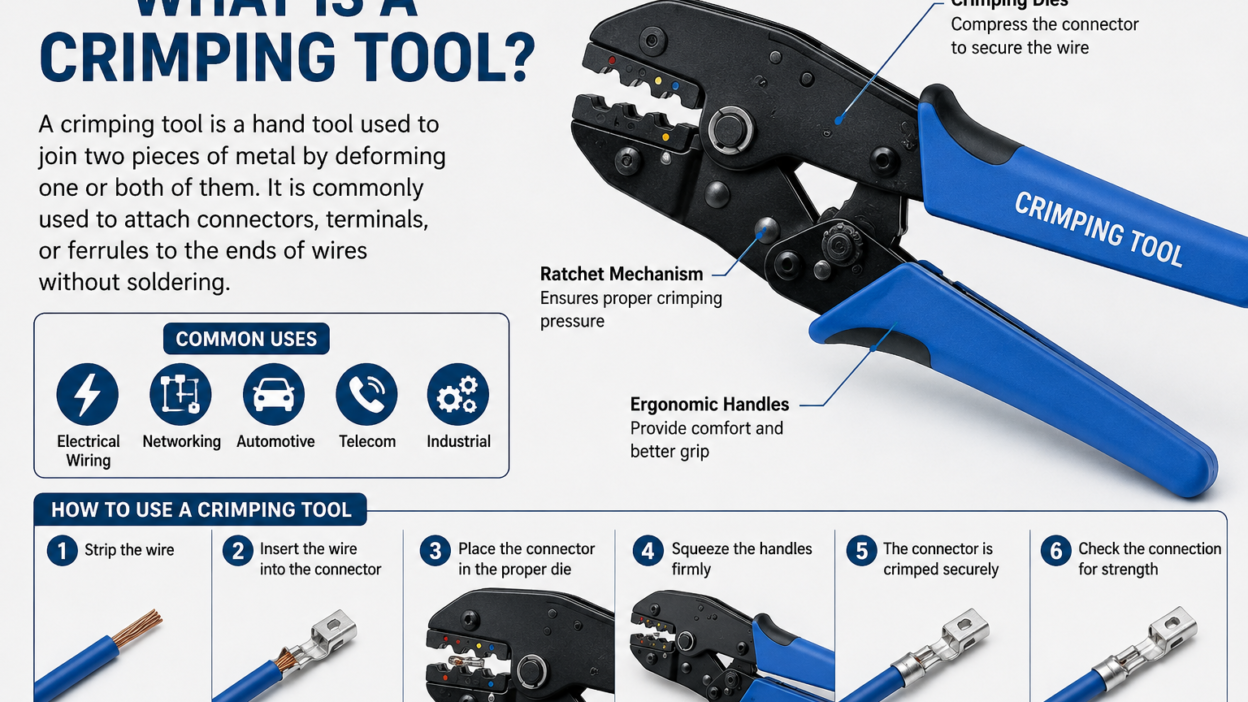
A crimping tool is a specialized device designed to join two pieces of metal by deforming one or both of them to hold the other. In electrical work, it is commonly used to attach connectors, terminals, or ferrules to the ends of wires.
The process is known as crimping. During crimping, the tool applies pressure to a connector, causing it to tightly grip the wire. This creates a durable and reliable connection that can conduct electricity effectively.
Unlike soldering, crimping does not require heat. This makes the process faster, cleaner, and more suitable for many industrial applications.
How Does a Crimping Tool Work?
A crimping tool works by compressing a metal connector around a wire.
The basic process includes:
- Strip the insulation from the wire.
- Insert the wire into the connector.
- Place the connector inside the crimping tool.
- Squeeze the handles firmly.
- The connector compresses around the wire.
- Check the connection for strength and security.
The result is a strong electrical connection that resists vibration, corrosion, and mechanical stress.
Main Components of a Crimping Tool
Understanding the components helps users operate the tool effectively.
Handles
The handles provide leverage and allow users to apply pressure.
Jaws
The jaws hold and compress the connector during crimping.
Crimping Dies
Dies determine the shape and size of the crimp.
Ratchet Mechanism
Many modern crimping tools include a ratchet system that ensures proper compression before releasing.
Adjustment Wheel
Some tools feature adjustable pressure settings for different connector sizes.
Types of Crimping Tools
There are several types of crimping tools designed for specific applications.
Manual Crimping Tools
Manual crimpers are operated by hand and are ideal for small projects and occasional use.
Advantages
- Affordable
- Portable
- Easy to use
- No power source required
Best For
- DIY projects
- Home repairs
- Small electrical installations
Ratchet Crimping Tools
Ratchet crimpers provide consistent pressure and improve crimp quality.
Advantages
- More accurate crimps
- Reduced hand fatigue
- Professional results
Best For
- Electrical work
- Network installations
- Automotive applications
Hydraulic Crimping Tools
Hydraulic crimpers use hydraulic pressure to generate greater force.
Advantages
- High crimping power
- Suitable for large cables
- Minimal effort required
Best For
- Industrial projects
- Power distribution systems
- Heavy-duty applications
Battery-Powered Crimping Tools
These tools use rechargeable batteries to automate the crimping process.
Advantages
- Fast operation
- Increased productivity
- Consistent results
Best For
- Professional electricians
- Industrial environments
- Large-scale installations
Common Uses of Crimping Tools
Crimping tools are used in many industries.
Electrical Wiring
Electricians use crimping tools to attach terminals and connectors to wires.
Telecommunications
Telephone and communication systems rely on crimped connections for signal transmission.
Networking
RJ45 and RJ11 connectors are commonly installed using specialized crimping tools.
Automotive Industry
Vehicle wiring harnesses use crimped connectors for reliable electrical connections.
Aerospace Industry
Aircraft wiring systems depend on precise crimping for safety and durability.
Manufacturing
Factories use crimping tools during equipment assembly and maintenance.
Types of Connectors Used with Crimping Tools
Different connectors require specific crimping methods.
Ring Terminals
Ring terminals attach wires to screws or bolts.
Spade Connectors
These connectors allow quick attachment and removal.
Butt Connectors
Used to join two wires together.
Ferrules
Ferrules strengthen wire ends and improve electrical contact.
RJ45 Connectors
Commonly used for Ethernet networking.
RJ11 Connectors
Used in telephone systems.
Benefits of Using a Crimping Tool
Crimping tools offer many advantages.
Reliable Connections
Proper crimps provide secure electrical connections.
Faster Installation
Crimping is quicker than soldering.
Cost Effective
No soldering equipment or heat source is required.
Improved Safety
Strong connections reduce electrical hazards.
Better Durability
Crimped joints resist vibration and environmental stress.
Professional Results
High-quality crimps improve system performance.
Crimping Tool vs Soldering
Many people compare crimping and soldering.
| Feature | Crimping | Soldering |
|---|---|---|
| Speed | Fast | Slower |
| Heat Required | No | Yes |
| Reliability | High | High |
| Portability | Excellent | Limited |
| Ease of Use | Easy | Moderate |
| Maintenance | Minimal | Higher |
For many industrial applications, crimping is preferred because it provides consistent and reliable results.
How to Choose the Right Crimping Tool
Selecting the correct tool depends on your project requirements.
Consider Wire Size
Choose a tool compatible with your wire gauge.
Check Connector Type
Different connectors require specific dies and crimping profiles.
Evaluate Frequency of Use
Professionals may benefit from ratchet or battery-powered models.
Look for Quality Materials
Durable steel construction ensures long-term performance.
Comfort and Ergonomics
Comfortable handles reduce fatigue during extended use.
Step-by-Step Guide to Using a Crimping Tool
Step 1: Select the Correct Connector
Match the connector size to the wire gauge.
Step 2: Strip the Wire
Remove the appropriate amount of insulation.
Step 3: Insert the Wire
Place the stripped wire fully into the connector.
Step 4: Position the Connector
Insert the connector into the correct crimping die.
Step 5: Crimp the Connector
Apply steady pressure until the crimp is complete.
Step 6: Test the Connection
Perform a pull test to ensure a secure bond.
Common Crimping Mistakes to Avoid
Even experienced users can make mistakes.
Using the Wrong Connector
Incorrect connector sizes create weak connections.
Over-Crimping
Excessive force may damage wires and connectors.
Under-Crimping
Insufficient pressure results in loose connections.
Improper Wire Stripping
Too much or too little exposed wire can affect performance.
Skipping Inspection
Always verify crimp quality before use.
Crimping Tool Maintenance Tips
Regular maintenance extends tool life.
Clean the Jaws
Remove dirt and debris after each use.
Lubricate Moving Parts
Apply light oil periodically.
Store Properly
Keep the tool in a dry environment.
Inspect for Damage
Replace worn dies and damaged components.
Calibrate When Necessary
Professional tools may require periodic calibration.
Safety Tips When Using a Crimping Tool
Follow these safety guidelines:
- Wear safety glasses.
- Use the correct tool for the job.
- Inspect wires before crimping.
- Avoid damaged connectors.
- Keep hands clear of moving parts.
- Follow manufacturer instructions.
Proper safety practices help prevent injuries and equipment damage.
Frequently Asked Questions (FAQ)
What is a crimping tool used for?
A crimping tool is used to attach connectors and terminals securely to wires without soldering.
Can I use pliers instead of a crimping tool?
Pliers may create weak and unreliable connections. A dedicated crimping tool is recommended.
Are crimped connections reliable?
Yes. Properly crimped connections are highly reliable and widely used in professional industries.
What industries use crimping tools?
Electrical, automotive, telecommunications, networking, aerospace, and manufacturing industries use crimping tools extensively.
How long does a crimped connection last?
A quality crimped connection can last for many years when installed correctly.
Conclusion
A crimping tool is an indispensable device for creating strong, reliable, and professional wire connections. From electrical installations and automotive wiring to networking and telecommunications, crimping tools play a critical role in ensuring safety and performance.
Choosing the right crimping tool, understanding proper crimping techniques, and following maintenance practices can greatly improve the quality of your work. Whether you are a beginner or an experienced professional, investing in a high-quality crimping tool will provide long-term benefits and dependable results.
By understanding what a crimping tool is and how it works, you can confidently tackle electrical and networking projects while achieving safe, durable, and efficient connections.